Most holiday catering advice focuses on office parties and corporate lunches. But December is also when families host the biggest gatherings of their year, and plenty of them would rather not cook for twelve people.
That’s an opportunity for restaurants that cater. A holiday meal package, a family-style dinner that customers pick up and serve at home, lets you reach customers who would never book an office lunch. It also fills the days around Christmas Eve and New Year’s Eve, when corporate catering usually slows down.
Here’s how to build, schedule and sell holiday meal packages without overloading your kitchen.
1. Build packages around the gathering, not the menu
Families aren’t ordering individual dishes. They’re solving a problem: “I have ten people coming on Christmas Eve.” Build your packages around that question.
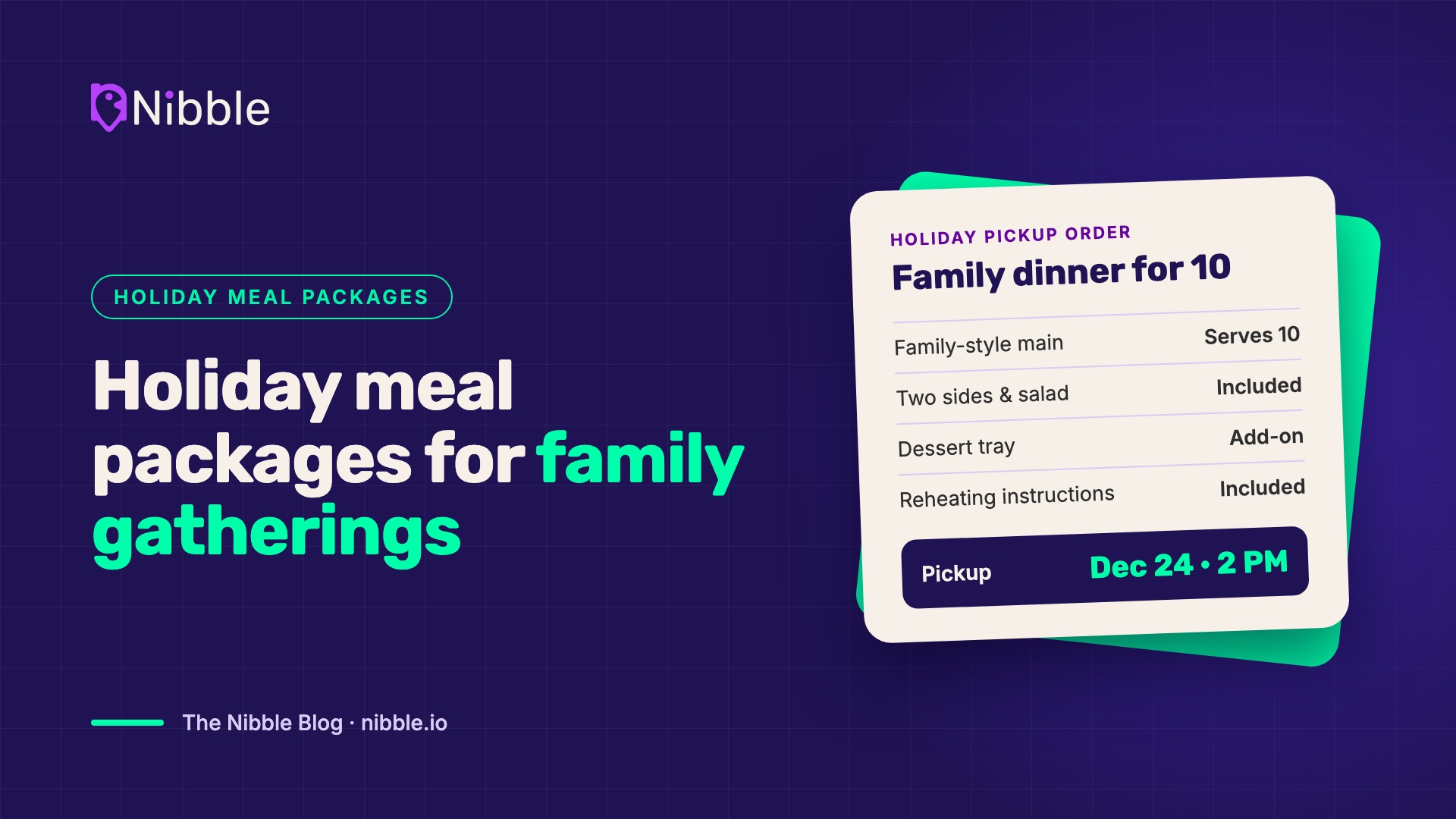
- Offer packages by group size, such as “serves 6” and “serves 10 to 12,” so customers can choose quickly.
- Combine a main, two or three sides, a salad and bread into one package, then offer desserts, drinks and extra sides as add-ons.
- Lean on dishes your kitchen already makes well and that reheat cleanly. A family-style version of a signature dish often sells better than a generic holiday roast.
Keep the lineup small. Two or three packages are easier to prep, easier to explain and easier to order. Our guide to designing a catering menu that sells and scales goes deeper on structuring packages.
2. Price for the whole table
Show the package price and how many people it serves, so customers can see the per-person value without doing the math. Holiday customers care more about clarity than about finding the lowest price.
Make sure your price covers the extra packaging, labeling and pickup handling that holiday orders require. If you’d like a refresher, read how to price catering profitably without scaring off clients.
3. Schedule pickups like reservations
Holiday meal orders tend to cluster on a handful of days, especially December 23 and 24 and December 31. If everyone shows up at 3 p.m. on Christmas Eve, the line goes out the door and regular service suffers.
- Offer pickup windows, such as 30-minute slots, and limit how many orders you accept per window.
- Set an order deadline for each holiday date, a few days ahead, so you can buy ingredients and plan prep.
- Set up a separate pickup spot or table so holiday orders don’t get mixed in with takeout.
An ordering system with scheduling and lead times lets customers choose an available date and time on their own, and an order calendar shows your team exactly what’s going out each day.
4. Make the food easy to serve at home
A holiday meal package is only as good as the experience at the customer’s table. Reheating instructions, clear labels and sturdy, oven-safe containers make a big difference.
- Include a printed card with reheating times and temperatures for each item.
- Label every container with the dish name and common allergens.
- Pack cold and hot items separately and tell customers which is which.
These details are what customers remember, and what makes them order again next year.
5. Take orders online, not over the phone
December phones ring nonstop, and holiday meal customers often have questions that take a while to answer over the phone. Moving these orders online saves your team hours.
A branded catering ordering page on your own website lets customers browse your packages, pick a pickup date and time, add extras and pay up front. Every order arrives complete, and you capture each customer’s contact details and order history. For customers who still prefer to call, Nibble ONE’s direct order entry lets your team enter phone orders into the same system, so every holiday order lives in one place.
6. Promote it to the customers you already have
Your best audience for holiday meal packages is people who already know your food: regular diners, takeout customers and anyone who has ordered catering from you before.
- Announce your packages in-house with table cards, receipt notes and a sign at the register.
- Share the ordering link on your website, Google Business Profile and social channels.
- Email past catering customers. Some of the office coordinators you served this year are hosting family gatherings too.
Customer profiles with order history make the last step simple. You can find past customers and invite them to order directly, without relying on a marketplace to reach them.
7. Plan your follow-up for January
Holiday meal customers are a new group of people who now know your catering. After the holidays, send a thank-you and remind them that you cater birthdays, game days and family events all year. For the corporate side of the season, see our corporate holiday catering guide.
Frequently asked questions
What should a restaurant holiday meal package include?
Most include a main dish, two or three sides, a salad and bread, sized for a specific number of guests. Desserts, drinks and extra sides work well as add-ons.
How far in advance should customers order holiday meal packages?
Set a deadline a few days before each holiday date, such as three to five days ahead, so you have time to order ingredients and plan prep.
Should holiday meal packages be pickup only?
Pickup is the simplest place to start because it keeps delivery capacity free during the busiest weeks. If you already deliver catering, you can offer delivery for larger packages in set windows.
Ready to take catering orders direct? Book a demo of Nibble ONE and see how restaurants run direct catering ordering, CRM and delivery in one place.