A single corporate catering client can be worth more than hundreds of individual guests. Offices order on a schedule, they reorder what works, and they rarely shop around once they’ve found a vendor they trust. With hybrid work concentrating office attendance on anchor days, the demand is predictable, too. (We covered that shift in Corporate Lunch Is Back.)
The challenge isn’t whether the demand exists. It’s getting in front of the right people and making it easy for them to choose you. Here’s a practical playbook.
1. Know who actually places the order
Corporate catering is rarely bought by executives. It’s ordered by office managers, executive assistants, HR and people-ops teams, workplace experience coordinators and department leads. They’re busy, they’re accountable if lunch goes wrong, and they value reliability over novelty. Everything in your approach should make their job easier.
2. Start close to home
Your best prospects are usually within a short delivery radius. Map the office buildings, business parks, medical offices, law firms, schools and coworking spaces around each location. Companies with 25 to 500 employees are often the sweet spot: big enough to order regularly, small enough that you can reach the person who decides.
3. Build a catering offer that’s easy to say yes to
- Packages by headcount so coordinators don’t have to build an order from scratch.
- Clear per-person pricing that fits common lunch budgets.
- Dietary options labeled up front: vegetarian, vegan and gluten-free choices that are easy to spot.
- Individually packaged options for teams that prefer them.
- Simple invoicing and the ability to pay by company card.
Our post on pricing catering profitably goes deeper on building packages that protect your margin.
4. Make the first order low-risk
Sampling still works. Drop off a tasting box for the office manager, or offer a first-order incentive for new corporate accounts. The goal isn’t a discount for its own sake. It’s lowering the risk of trying a new vendor for someone who’ll be blamed if it doesn’t go well.
5. Follow up like a sales team, not a kitchen
Most restaurants lose corporate catering clients after the first order simply because nobody followed up. A good rhythm looks like this:
- Day after the order: a short thank-you and a check-in on how it went.
- One week later: share a saved version of their order so they can rebook in one click.
- Monthly: a light touch with seasonal menu ideas or upcoming holiday packages.
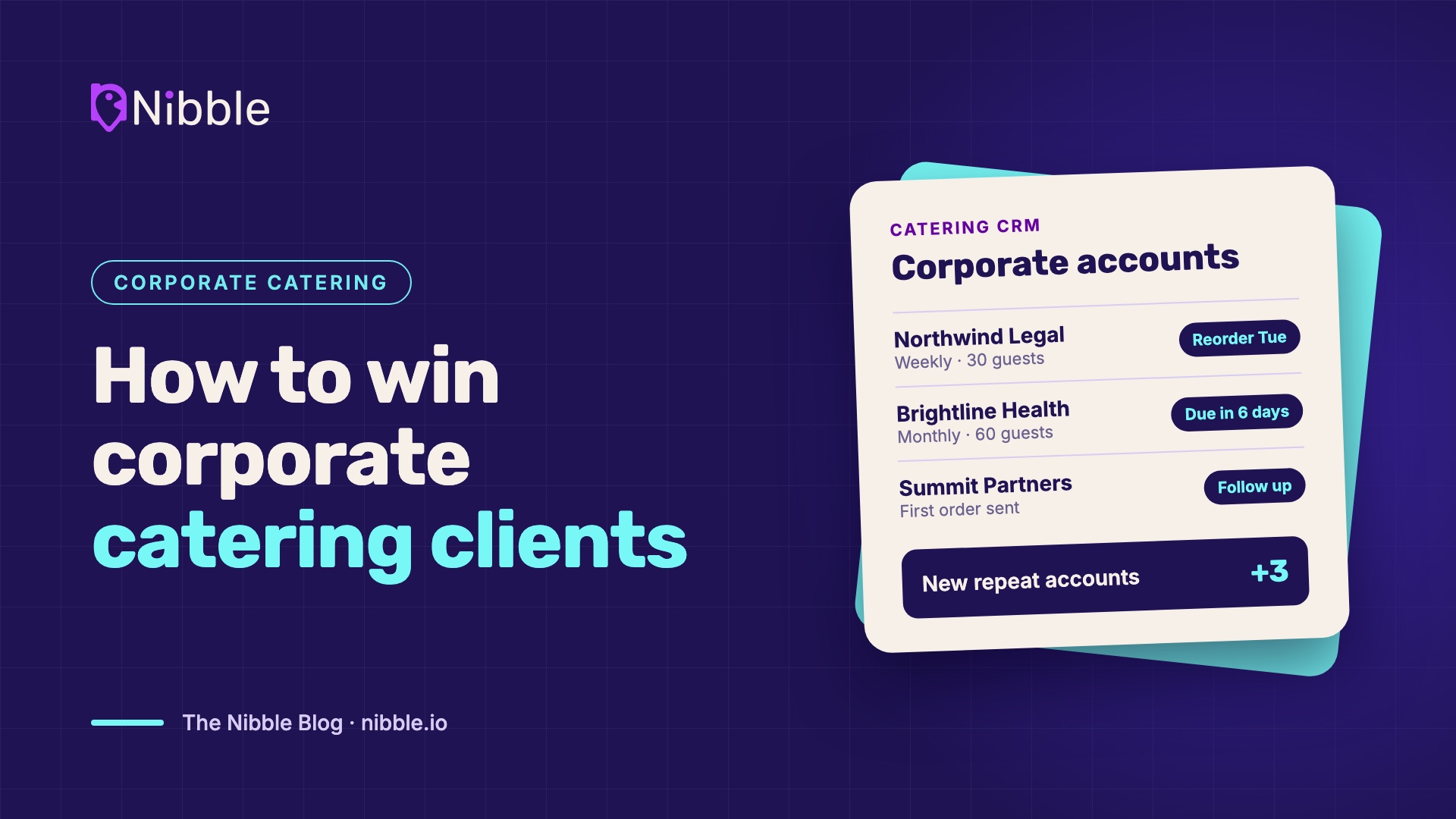
This is where a catering CRM earns its keep. When you can see order history, reorder timing and account notes in one place, follow-up becomes routine instead of something that gets forgotten during a busy week. We talk more about this mindset in Stop Selling Catering the Same Way You Sell Takeout.
6. Deliver on time, every time
Corporate clients forgive a lot, but not a late lunch in front of their leadership team. Commit to delivery windows you can hit, use drivers who understand catering setup, and confirm the delivery time the day before. Reliability is the single biggest reason companies keep a vendor in their rotation.
7. Make reordering effortless
Once a company likes you, the easiest path to a standing account is a direct ordering link they can bookmark. Coordinators who can reorder in two minutes from your own site have no reason to go back to a marketplace and compare. That’s how Seattle’s Vinason Pho & Grill grew catering orders by 270% while serving corporate clients like Microsoft, Amazon and Stripe.
Frequently asked questions
How do restaurants find corporate catering leads?
Start with businesses within your delivery radius. Use local business directories, LinkedIn searches for office managers and workplace coordinators, and your existing customers’ employers. Referrals from happy coordinators are often the strongest leads.
What do corporate clients look for in a caterer?
Reliability, easy ordering, clear pricing, labeled dietary options and simple invoicing. Food quality gets you the first order. Consistency gets you the second.
How often do corporate catering clients reorder?
It varies by company, but many offices order weekly or monthly, especially around team meetings, anchor in-office days and seasonal events.
Ready to take catering orders direct? Book a demo of Nibble ONE and see how restaurants run direct catering ordering, CRM and delivery in one place.