Catering is usually the highest-ticket order a restaurant takes. A single office lunch can equal a full dinner service’s worth of individual tickets. So it’s worth asking a simple question: why do so many restaurants still send those orders, and those customers, through someone else’s platform?
For most operators, the answer is habit. Marketplaces were the easiest way to get a catering menu online, and once orders started flowing, nobody revisited the setup. This guide covers what direct catering online ordering is, why it matters more for catering than for everyday takeout, and how to set it up without disrupting what’s already working.
What direct catering online ordering means
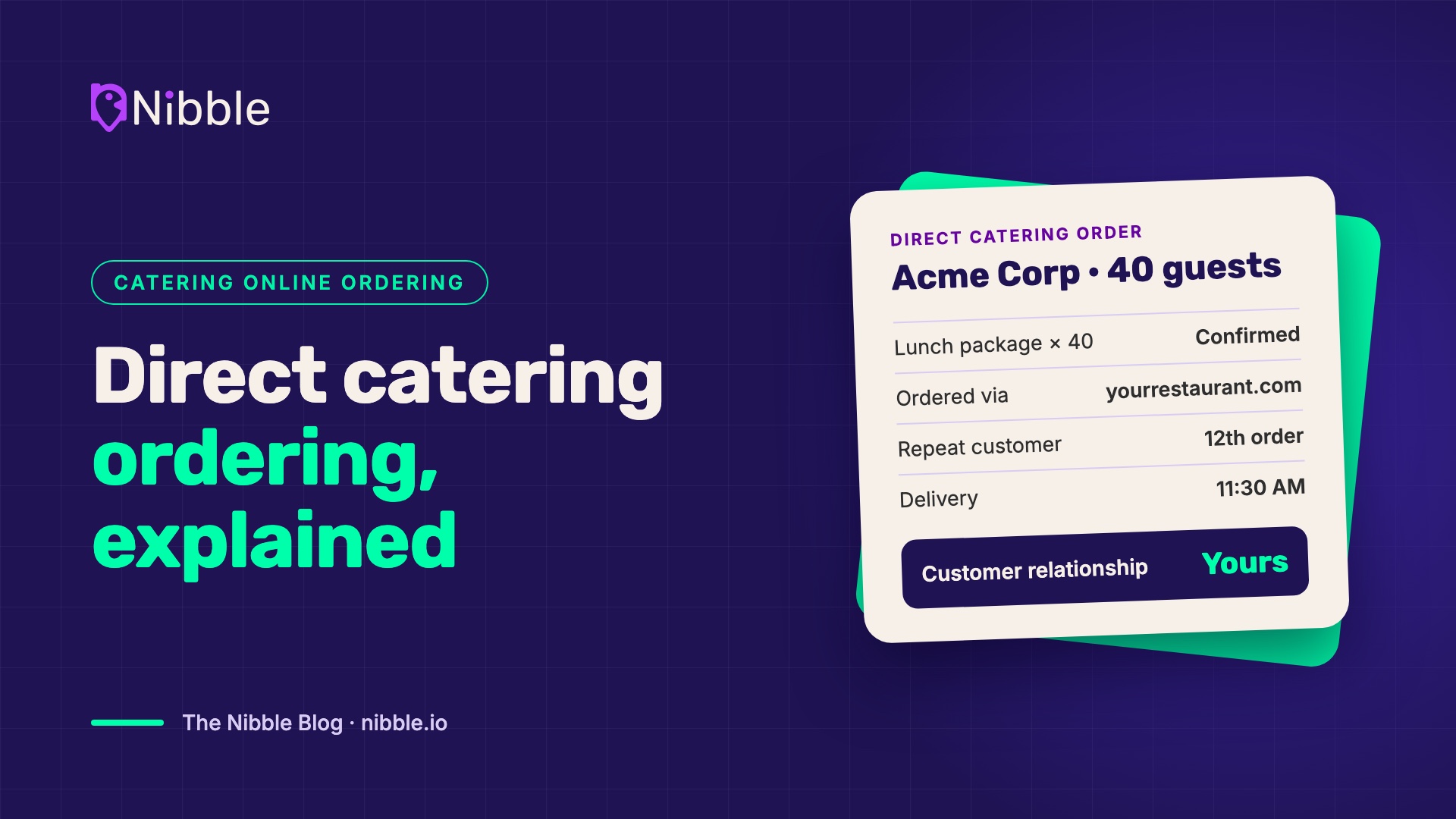
Direct, or first-party, catering online ordering is a branded ordering experience that lives on your own website, where customers place catering orders with you instead of through a third-party marketplace. The customer, the order data and the relationship stay with your restaurant.
That matters more than it sounds. On a marketplace, the office manager who orders from you every month is the marketplace’s customer. They see your restaurant next to a dozen competitors every time they log in. With direct ordering, they come back to you.
Why ownership matters more on catering than on takeout
Catering customers aren’t one-time buyers. That makes owning the relationship most valuable exactly where your business is most valuable:
- Bigger tickets. A single catering account can be worth thousands of dollars a year. That’s too valuable to leave sitting in someone else’s customer list.
- Catering margins are engineered. You price catering around food cost, labor, packaging and delivery. Controlling the ordering channel lets you control the economics of every order.
- Repeat accounts compound. Corporate clients reorder weekly or monthly. When you own the relationship, every reorder strengthens your business instead of a marketplace’s.
We break down the marketplace side of the equation in The Hidden Cost of Catering Marketplaces.
What a good catering online ordering system needs
A catering order isn’t a takeout order with more food. If you’re evaluating a direct ordering system, look for features built for how catering actually works:
- A dedicated catering menu. Packages, trays, per-person pricing and minimums, not your dine-in menu with bigger quantities.
- Lead times and scheduling. Customers should be able to order days or weeks ahead, and you should be able to set cutoffs that match your kitchen’s capacity.
- Group-friendly checkout. Headcounts, dietary notes, delivery instructions and invoicing fields that office coordinators actually need.
- A built-in catering CRM. Order history, reorder prompts and account notes so you can see who your best customers are and when they’re due to order again.
- Delivery management. The ability to send orders with your own drivers or a catering-trained fleet of your choice, with delivery windows that hold.
How to switch without losing orders
You don’t have to leave marketplaces overnight. Most operators who move catering to direct ordering follow a gradual path:
- Launch your direct catering menu. Put a clear “Order Catering” button on your website’s homepage and navigation. This is the channel you’ll grow.
- Move your repeat customers first. Reach out to accounts that already order regularly and invite them to reorder directly. Make it easy: a link, a saved order, a quick note from the owner.
- Add the direct link everywhere. Include it in packaging inserts, receipts, email signatures, your Google Business Profile and the catering order confirmations you send.
- Use marketplaces for discovery only. Let marketplaces bring new customers in, then give those customers a reason to order direct next time.
What results look like
When Midland Pizza Factory launched a branded catering menu on its own site, it went from a catering program that existed only on third-party platforms to roughly $1,700 a month in direct online catering sales, revenue that had no direct channel before. Seattle’s Vinason Pho & Grill saw a 270% increase in catering orders and an 11% lift in average order value after moving catering to a direct ordering and CRM workflow.
The pattern is consistent: when customers can order catering directly, easily and reliably, they do, and the restaurant keeps the relationship.
Frequently asked questions
What’s the difference between direct catering ordering and a marketplace?
A marketplace lists your restaurant alongside competitors and owns the customer relationship. Direct catering ordering runs on your own website and brand, so customer data, order history and repeat business stay with you.
Do I need to stop using catering marketplaces?
No. Many restaurants keep marketplaces as a discovery channel while moving repeat customers to direct ordering. Over time, the share of orders that come direct tends to grow.
Can I use my own delivery drivers?
With a system like Nibble ONE, yes. You can deliver with your own team or dispatch to a catering-trained delivery fleet of your choice.
Ready to take catering orders direct? Book a demo of Nibble ONE and see how restaurants run direct catering ordering, CRM and delivery in one place.